

When Is an Air Ambulance Medically Necessary?
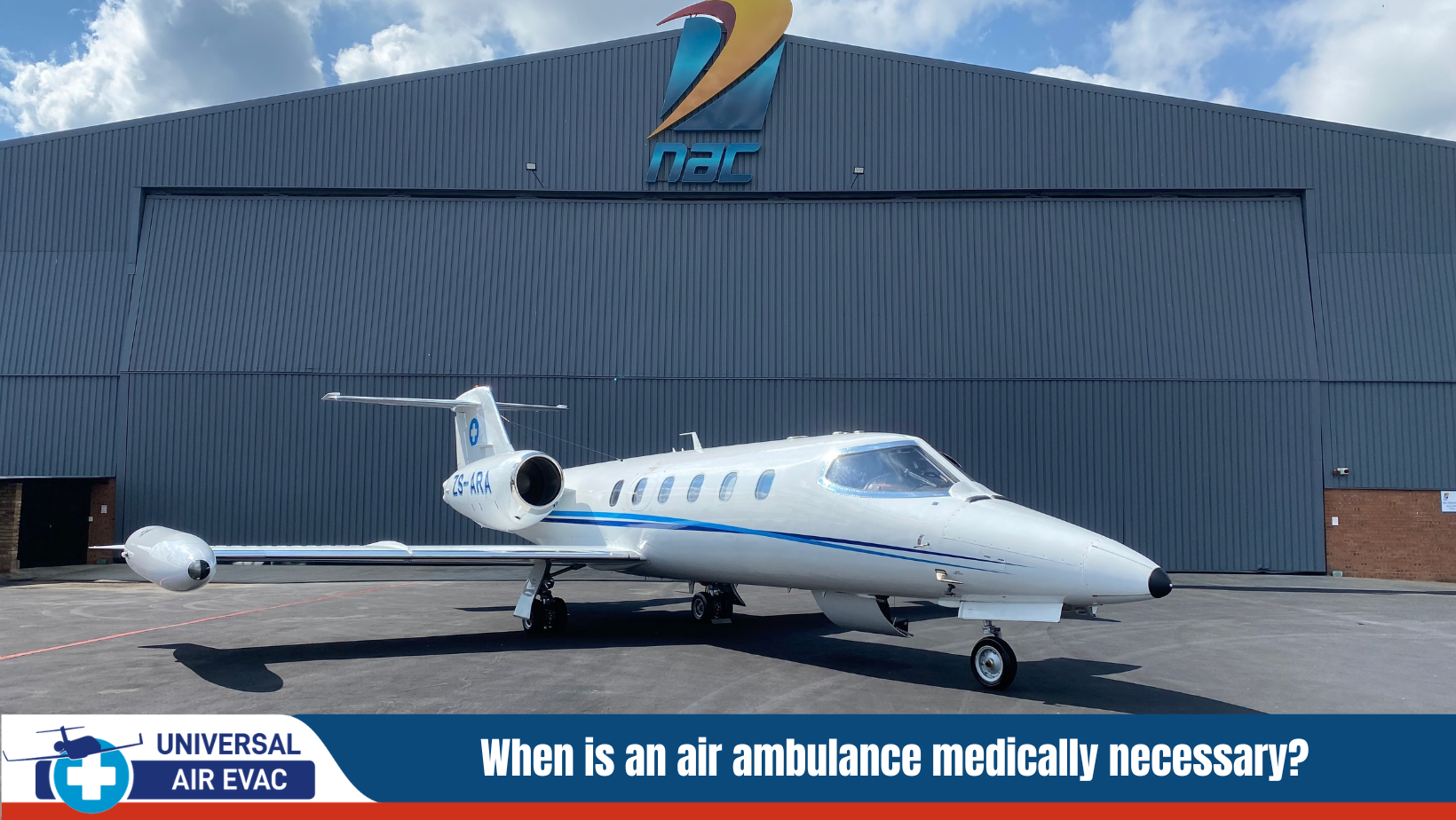
Medical emergencies do not always happen close to advanced healthcare facilities. In some cases, a patient requires rapid transfer to a specialised hospital while receiving continuous medical care. In these situations, an air ambulance is not a luxury service, it is a medically necessary extension of critical care.
Understanding when an air ambulance is clinically appropriate involves careful medical assessment, logistical planning and strict clinical governance. Providers such as us at Universal Air Evac apply structured decision-making protocols to determine when aeromedical transport is the safest and most effective option for a patient.
Below are the key clinical scenarios where air ambulance transport becomes medically necessary.
The Need for ICU-Level Care in Transit
One of the primary indicators for air ambulance transport is when a patient requires intensive care during the journey.
Many critically ill patients cannot safely travel without advanced life-support systems and highly trained medical professionals. These patients may require advanced life support, monitoring and / or interventions, including, but not limited to:
- Advanced airway management
- Mechanical ventilation
- Continuous cardiac monitoring
- Intravenous medication infusions
- Specific immobilization
- Wound management
- Intensive care nursing and doctor oversight
A properly configured air ambulance functions as a flying intensive care unit, allowing specialised medical teams to stabilise and manage patients throughout the flight.
At Universal Air Evac, aircraft are permanently configured for ICU-level care, enabling medical teams to provide the same level of monitoring and intervention that a patient would receive in a hospital critical care environment.
Severe Trauma and Time-Critical Emergencies
Air ambulance transport is frequently required in time-sensitive medical emergencies where rapid access to specialised treatment can significantly affect patient outcomes.
These include:
Major Trauma
Patients who have suffered serious injuries from road accidents, falls, industrial incidents or violence may require immediate transfer to a Level 1 trauma centre that offers specialist surgical teams and advanced imaging.
Ground transport may simply take too long, particularly in remote regions.
Stroke
For stroke patients, time is brain. Rapid transfer to facilities capable of performing thrombectomy or advanced neurological interventions can dramatically improve survival and recovery.
Cardiac Events
Patients experiencing heart attacks, unstable cardiac rhythms or cardiogenic shock often need urgent transfer to hospitals with cardiac catheterisation laboratories or cardiac surgery teams.
In these cases, the speed of aeromedical evacuation combined with onboard cardiac monitoring and specialist care can be lifesaving.
Paediatric Transport
Transporting critically ill children requires highly specialised equipment and clinical expertise.
Paediatric patients are physiologically different from adults and often require:
- Specialised paediatric ventilators
- Weight-specific medication dosing
- Clinicians trained in paediatric intensive care
Air ambulance services capable of paediatric ICU transport ensure that young patients receive appropriate care throughout the journey.
Universal Air Evac’s aircraft are equipped for both adult and paediatric ICU care, allowing the medical team to safely transport vulnerable patients who require specialised monitoring and treatment.
Remote Locations and Limited Medical Infrastructure
Another important factor in determining medical necessity is geographic accessibility.
Patients located in remote areas or regions with limited healthcare infrastructure may require aeromedical evacuation to reach hospitals capable of providing the treatment they need.
This is particularly relevant across parts of Africa and surrounding regions where distances between advanced medical facilities can be substantial. In these situations, air ambulance transport ensures that critically ill patients can access appropriate care without dangerous delays.
Infectious Disease and Specialised Transport
Certain medical cases require controlled transport environments to protect both the patient and medical personnel.
Patients with infectious diseases or complex medical conditions may need specialised isolation procedures and strict infection control protocols during transfer.
Dedicated air ambulance aircraft allow medical teams to implement these protocols while maintaining safe and effective patient care throughout the journey.
Clinical Governance and Medical Decision-Making
Determining whether an air ambulance is medically necessary is never a purely logistical decision. It requires clinical judgement, risk assessment and governance oversight.
Professional aeromedical providers rely on:
- Doctor-led medical teams
- Standardised clinical protocols
- Coordination with referring and receiving hospitals
- Continuous monitoring of patient stability and transport risk
Universal Air Evac operates under structured clinical governance, ensuring that each mission is medically justified, properly planned and safely executed.
Choosing the Right Air Ambulance Provider
When a patient’s condition requires aeromedical transport, selecting the right provider is critical.
Key considerations include:
- Highly trained, mission-specific medical crews
- Aircraft configured for ICU-level care
- Compliance with aviation safety standards
- Transparent communication and cost structures
- Proven operational experience
Universal Air Evac has built a reputation as Africa’s most trusted air ambulance and commercial medical escort provider, delivering end-to-end patient transport with safety, professionalism and compassion.
With doctor-based medical teams, permanently configured long-range jet air ambulances and 24/7 operational support, patients and families can rely on expert care every step of the journey.
Safe, Professional Aeromedical Care
When a medical emergency occurs, rapid access to the right level of care can make a life-saving difference.
Air ambulance transport provides a critical link between hospitals, specialists and patients in need of urgent medical intervention. Through rigorous clinical governance, specialised equipment and experienced aeromedical teams, providers such as Universal Air Evac ensure that critically ill patients receive safe, high-quality care from bedside to bedside.
If you would like to learn more about air ambulance services or commercial medical escorts, Universal Air Evac’s team is available 24 hours a day, 365 days a year to assist.