

From Summer to Winter: How Air Ambulance Teams Manage Extreme Climate Transitions
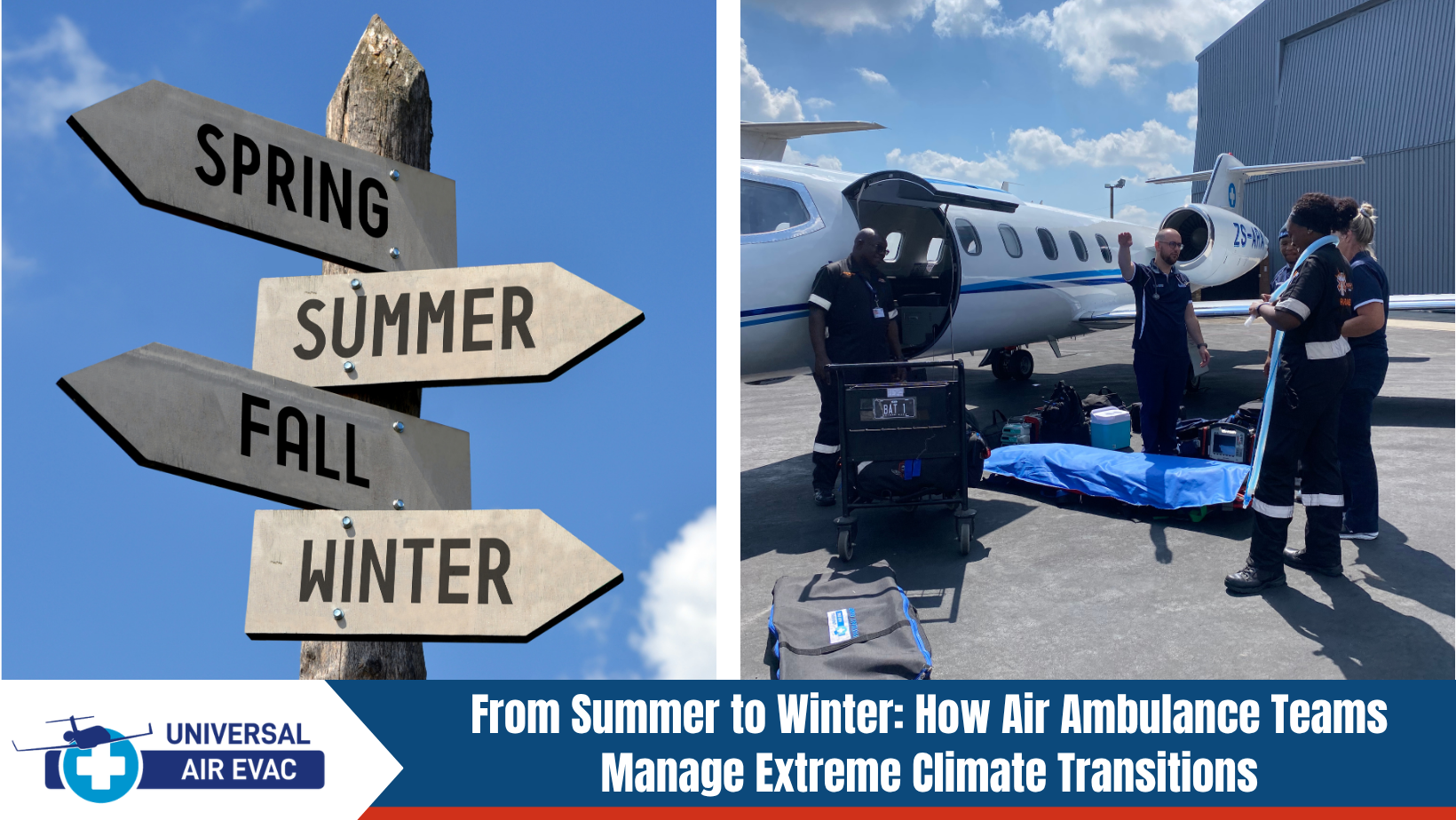
Every year, more than 900,000 patients are repatriated by air worldwide. For many of these patients, the journey is not just long, it involves a sudden transition between climates, seasons, and environmental conditions that can directly impact recovery. When these missions are between continents, patients and crews may move from summer conditions to winter environments within a matter of hours.
This introduces clinical, operational, and environmental considerations that must be carefully managed. At Universal Air Evac, every mission is planned with these variables in mind. From crew preparedness to aircraft design and medical protocols, transitioning between climates is a routine, but highly specialised, part of delivering safe, effective care.
Crew Preparedness: Training for Every Climate
Air ambulance crews operate in a uniquely dynamic environment. Unlike hospital-based teams, they must be ready to adapt not only to changing patient conditions but also to rapidly shifting climates.
Flight doctors and pilots are trained to anticipate how temperature, humidity, and altitude can influence both patient physiology and equipment performance. This includes understanding how cold environments may affect circulation, respiratory function, and even pain perception, particularly in trauma patients.
Preparation begins before take-off. Crews assess departure and arrival conditions, ensuring they are equipped with appropriate clothing, protective gear, and contingency plans. It’s not uncommon for a team to depart in light summer attire and arrive hours later in winter conditions requiring thermal protection.
Recently, one of our crews experienced this contrast first-hand, departing from warm conditions and later pausing for a brief coffee stop in snow-capped mountains en route. While moments like these offer a rare chance to reflect, they also highlight the importance of adaptability in this line of work.
Aircraft Design: Built for Environmental Extremes
Modern air ambulance aircraft are engineered to operate across a wide range of environmental conditions. Pressurised cabins, advanced climate control systems, and robust insulation ensure that patients remain in a stable and controlled environment regardless of external temperatures.
Cabin temperature is carefully regulated throughout the flight, maintaining a consistent clinical setting similar to that of an ICU. This is particularly important when transitioning between climates, as sudden temperature changes can place additional stress on already vulnerable patients.
Aircraft systems are also designed to perform reliably in both hot and cold conditions. From engine efficiency in varying air densities to de-icing capabilities in colder regions, every component is built with safety and consistency in mind.
Medical Equipment: Stability and Precision
Just as the aircraft must adapt to environmental changes, so too must the medical equipment onboard.
Ventilators, monitors, infusion pumps, and diagnostic devices are all selected for their reliability across a range of temperatures and altitudes. These systems are tested and maintained to ensure consistent performance, whether operating in summer heat or winter cold.
Temperature-sensitive equipment is carefully managed, with storage protocols in place to prevent exposure to extremes during loading, unloading, or ground time. Battery performance, which can be affected by cold conditions, is also closely monitored to ensure uninterrupted operation.
Medication Considerations: Managing Sensitivity and Efficacy
Medication management is another critical factor when transitioning between climates.
Many medications used in critical care are sensitive to temperature variations. Exposure to excessive heat or cold can compromise their stability and effectiveness. To mitigate this, air ambulance teams use controlled storage solutions, including insulated compartments and temperature monitoring systems.
In addition to storage, clinicians must consider how environmental changes may affect drug metabolism and patient response. For example, dehydration in warmer climates or vasoconstriction in colder environments can influence how medications are absorbed and distributed in the body.
Careful planning ensures that all medications administered during the flight remain safe, effective, and appropriate for the patient’s condition.
Patient-Centred Care Across Continents
For patients being repatriated, such as those injured during a summer holiday in Europe and returning to a winter climate in Johannesburg, the journey involves more than just transportation. It requires continuity of care across environments that may differ significantly.
Crews take this into account when preparing patients for arrival. This may include adjusting blankets and warming strategies, ensuring hydration levels are appropriate, and communicating with receiving medical teams about environmental differences that could impact recovery.
The goal is to ensure that the transition is as seamless as possible, minimising physiological stress and supporting ongoing treatment.
Delivering Consistency in an Inconsistent World
Air ambulance missions operate in a world where variables are constantly shifting, weather, geography, patient condition, and time pressures all play a role. Yet, the standard of care must remain constant.
At Universal Air Evac, this consistency is achieved through meticulous planning, highly trained crews, and aircraft equipped to handle the full spectrum of environmental conditions.
Whether crossing continents or seasons, patients and their families can be reassured that every detail has been considered, ensuring safe, stable, and professional care from departure to destination.