

How to Prepare a Patient for an Air Ambulance Evacuation
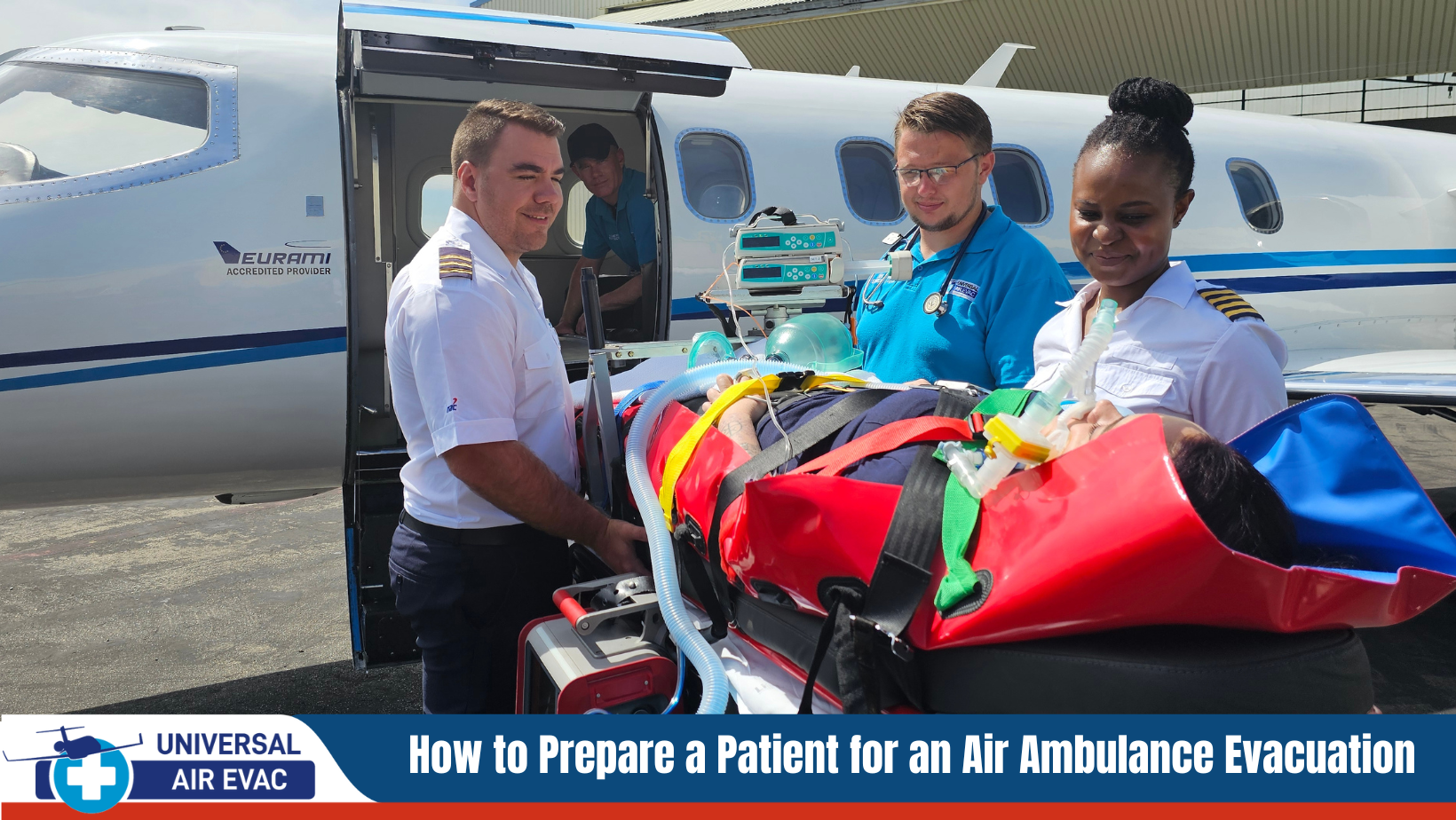
When a patient requires an air ambulance evacuation, preparation is a critical component of safety, efficiency, and clinical outcome. Whether the transfer is urgent or planned, pre-flight readiness ensures continuity of care and reduces stress for both medical teams and families.
Understanding what needs to be in place before an air ambulance flight allows referring doctors and loved ones to work effectively with the air medical provider and focus on what matters most, the patient’s wellbeing.
Medical Records and Documentation
Accurate and complete medical documentation is the foundation of any safe air ambulance transfer. Before flight planning begins, the air medical team must fully understand the patient’s condition, treatment history, and current clinical status.
Essential documents typically include recent medical reports, discharge summaries, laboratory results, and radiology imaging where applicable. A current medication list, including dosages and infusion requirements, is equally important. These records allow the flight doctor to assess fitness to fly, anticipate potential complications, and ensure that the appropriate medical equipment and medications are configured for the mission.
In addition to clinical information, identification documents and, for international transfers, passports and visas must be available. Insurance or medical aid details and guarantees of payment may also be required to avoid delays. Having documentation organised and accessible significantly shortens activation time and allows the medical crew to prepare with precision.
Patient Stabilisation Before Transfer
Stabilisation is a key requirement before any air ambulance evacuation. While air ambulances are equipped to provide advanced ICU-level care, optimal outcomes depend on the patient being as clinically stable as possible prior to departure.
The referring medical team plays a vital role in this phase. Airway management, haemodynamic stability, pain control, and secure intravenous or invasive lines must be established and assessed. For ventilated patients, appropriate ventilation settings and oxygen requirements are reviewed in advance to ensure compatibility with transport equipment.
Communication between the referring doctor and the air ambulance medical team is essential. The flight doctor may request specific interventions or adjustments before accepting the patient for transfer. These requests may differ from what is indicated or acceptable in the ground-based environment but are driven by the unique physiological stresses of flight. This collaborative approach ensures that the transition from hospital bed to aircraft is seamless and that no critical care gaps occur during transport. Clear counselling of the patient and family is often required to explain the rationale for such interventions and to support shared understanding of the requirements for safe aeromedical transfer.
It is important to note that fitness to fly is not solely about urgency. Altitude, cabin pressure, and flight duration can all affect a patient’s physiology. Thorough pre-flight assessment allows risks to be anticipated, mitigated, and the safest possible transport plan to be implemented.
Family Coordination and Timelines
For families, an air ambulance evacuation is often an emotionally challenging experience. Clear communication and realistic timelines help reduce uncertainty and anxiety during an already stressful period.
Families should be informed early about the expected process, including estimated departure times, flight duration, and handover at the receiving facility. In some cases, international transfers may involve permits, overflight clearances, or hospital bed confirmations, which can influence timelines. Understanding these variables helps set appropriate expectations.
Families can also assist by designating a primary point of contact to communicate with the air ambulance provider. This ensures consistent information flow and avoids confusion during critical decision-making moments. Personal items, if permitted, should be limited to essentials, as medical equipment and patient care remain the priority onboard.
Air ambulance providers with dedicated 24/7 flight desks typically offer regular updates throughout the mission. This ongoing communication provides reassurance and allows families to focus on supporting the patient rather than managing logistics.
Preparedness Makes the Difference
Preparing a patient for an air ambulance evacuation is a shared responsibility between referring clinicians, families, and the air medical provider. Comprehensive medical documentation, appropriate stabilisation, and effective coordination all contribute to a safe and efficient transfer.
At Universal Air Evac, every mission is meticulously planned to ensure continuity of care from point of departure to final handover. With experienced, doctor-led medical teams and dedicated operational support, patients and families can be confident that preparation and professionalism underpin every flight.
When time, safety, and expertise matter most, thorough pre-flight readiness makes all the difference.