

How Paediatric and Adult ICU Air Transfers Differ
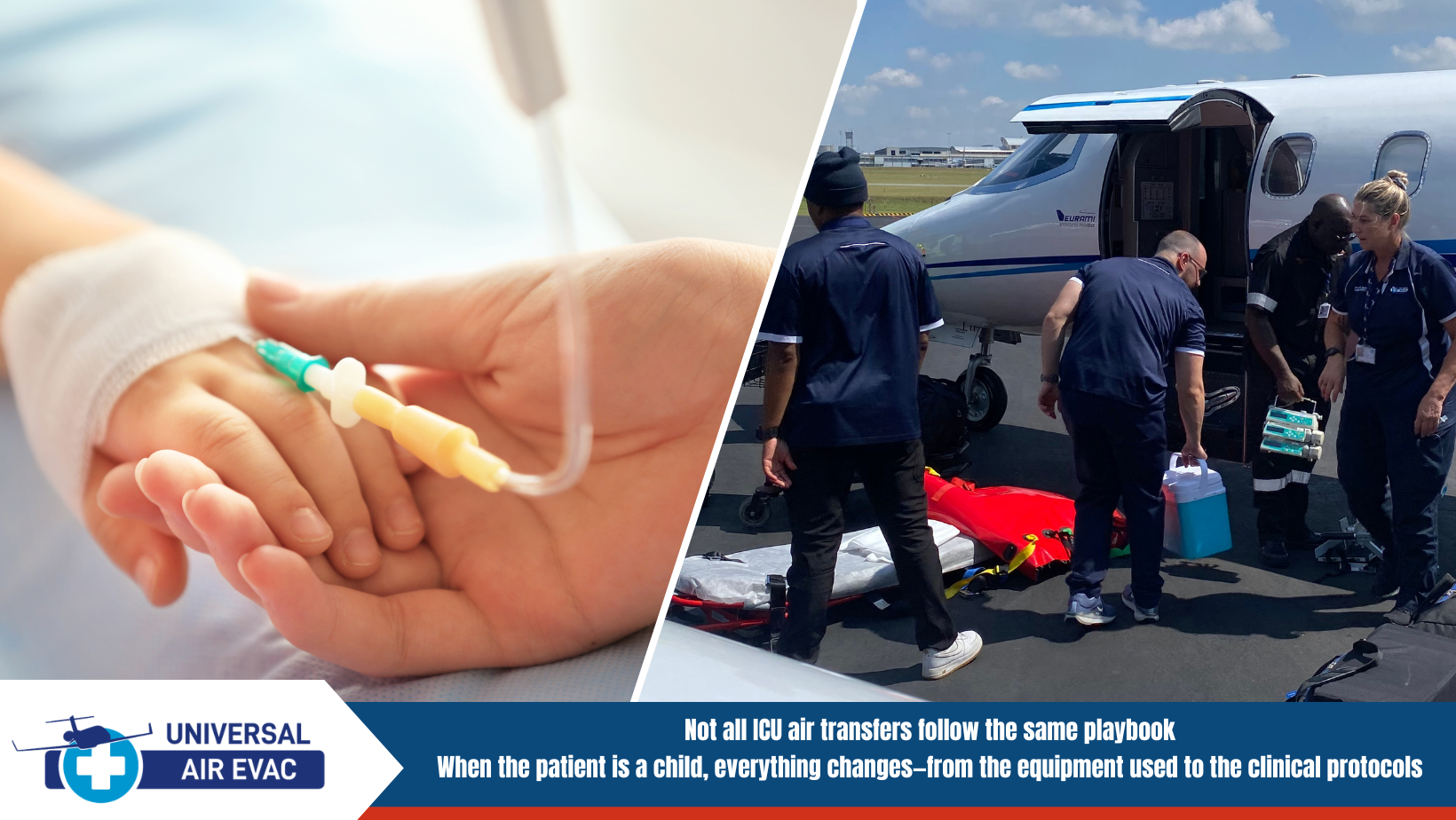
When a critically ill patient requires urgent relocation, air ambulance transfers provide a vital lifeline. However, not all intensive care transfers are the same. Paediatric and adult ICU air transfers differ significantly in terms of clinical approach, equipment, and the human considerations involved.
At Universal Air Evac, these differences are central to how missions are planned and delivered, ensuring every patient receives care tailored precisely to their needs.
Specialised Care for Different Physiology
The most fundamental difference between paediatric and adult ICU transfers lies in physiology. Children are not simply “small adults”; their bodies respond differently to illness, medication, and environmental stressors such as altitude changes during flight.
Paediatric patients, particularly neonates and infants, have unique respiratory and cardiovascular dynamics. They are more vulnerable to rapid deterioration and require continuous, highly specialised monitoring. Drug dosages must be calculated with precision based on weight, and even minor miscalculations can have significant consequences.
In contrast, adult ICU transfers typically involve managing complex chronic conditions or acute events such as cardiac arrest, stroke, or trauma. While still highly demanding, adult care protocols are generally more standardised, whereas paediatric care often requires more nuanced, case-by-case decision-making.
Equipment: Size, Sensitivity, and Adaptation
One of the most visible differences between paediatric and adult transfers is the equipment used. Air ambulances must be configured differently depending on the patient’s age and size.
For paediatric missions, equipment must be appropriately scaled. This includes ventilators capable of delivering very small tidal volumes, paediatric-sized airway tools, and incubators for neonatal patients. Monitoring devices must also be sensitive enough to detect subtle physiological changes. Even securing a child safely within the aircraft requires specialised restraints and transport systems.
Adult transfers, by comparison, use larger, more standard ICU equipment. While still advanced and highly specialised, it is generally more uniform in design and application.
At Universal Air Evac, aircraft are equipped with systems that can be adapted quickly for either paediatric or adult missions. This flexibility ensures that every patient benefits from the correct tools without compromise.
Protocols and Training: The Role of PALS
Clinical protocols also differ significantly. Paediatric transfers are guided by frameworks such as Paediatric Advanced Life Support (PALS), which emphasise early recognition of deterioration, precise medication dosing, and age-specific resuscitation techniques. While PALS provides an essential foundation for paediatric care, it represents one component of a broader training framework for safe and effective transport.
Our crew members have a wide range of competencies beyond formal life-support certification This collective expertise is essential, as paediatric emergencies can evolve rapidly and require immediate, highly skilled intervention.
Adult ICU transfers, on the other hand, are guided by frameworks such as Advanced Life Support (ALS) protocols. While equally rigorous, these protocols address a different set of clinical priorities and patient profiles, and form part of a wider skill set that equips crew to manage critically ill adult patients in transport environments.
The distinction is not merely academic, it directly impacts patient outcomes. It is the combination of structured protocols, clinical experience, ongoing education, and multidisciplinary training that ensures care delivered in the air is as safe and effective as that provided in a hospital ICU.
Family Considerations: A Critical Difference
Perhaps the most profound difference between paediatric and adult air transfers lies in the emotional and family dynamics involved.
When a child requires air transfer, families are often under extreme stress. Parents or guardians must place their trust in a clinical team while facing uncertainty about their child’s condition. Whenever possible, air ambulance providers strive to accommodate a parent accompanying the child, offering reassurance and continuity of care.
Communication is also handled differently. Medical teams must balance clinical precision with empathy, ensuring families understand what is happening without becoming overwhelmed.
In adult transfers, family involvement remains important but is typically less immediate during the transport itself. Decisions may involve next of kin, but the emotional dynamic differs from that of a paediatric case, where the patient is often entirely dependent on parental support.
At Universal Air Evac, family-centred care is a priority. Crews are trained not only in clinical excellence but also in compassionate communication, recognising that supporting the family is an integral part of supporting the patient.
Reassurance Through Expertise
Understanding these differences is crucial for both clinicians arranging transfers and families facing difficult circumstances. Paediatric and adult ICU air transfers are not interchangeable services; each requires a distinct approach, specialised equipment, and highly trained personnel.
Universal Air Evac is committed to delivering this level of tailored care on every mission. From experienced, PALS-certified crews to adaptable aircraft and a strong focus on family support, every detail is designed to ensure safety, comfort, and clinical excellence.
For families, this means reassurance that their loved one—no matter their age—is in capable hands. For clinicians, it means confidence that their patient will receive continuity of care at the highest standard, even at 30,000 feet.